

Transient Voltage Suppressors (TVS)
What are Transient Voltage Suppressors (TVS)?
TVS (transient voltage suppression diode) is an overvoltage protection device based on semiconductor technology, with bidirectional voltage regulation characteristics and bidirectional negative resistance characteristics. Its core function is to suppress transient high-voltage pulses in the circuit (such as electrostatic discharge, lightning surge), and protect the back-end electronic components from damage by quickly clamping the voltage.
How do Transient Voltage Suppressors (TVS) Work?
1. Normal State
TVS presents a high-resistance state (extremely low leakage current), which does not affect the normal operation of the circuit.
2. Transient Overvoltage Triggering
When the voltage exceeds the breakdown threshold (VBR), TVS switches to a low-resistance state within picoseconds, discharges the current to the ground through the avalanche breakdown effect, and clamps the voltage within a safe range (VC).
3. Recovery Process
After the overvoltage disappears, TVS automatically returns to a high-resistance state and continues to monitor the circuit.
What are the Classification and Packaging of Transient Voltage Suppressors (TVS)?
1. Polarity Classification
Unidirectional TVS: Suitable for DC circuits, with characteristics similar to voltage regulator diodes.
Bidirectional TVS: used for AC or circuits requiring bidirectional protection, equivalent to two voltage regulators connected in reverse series.
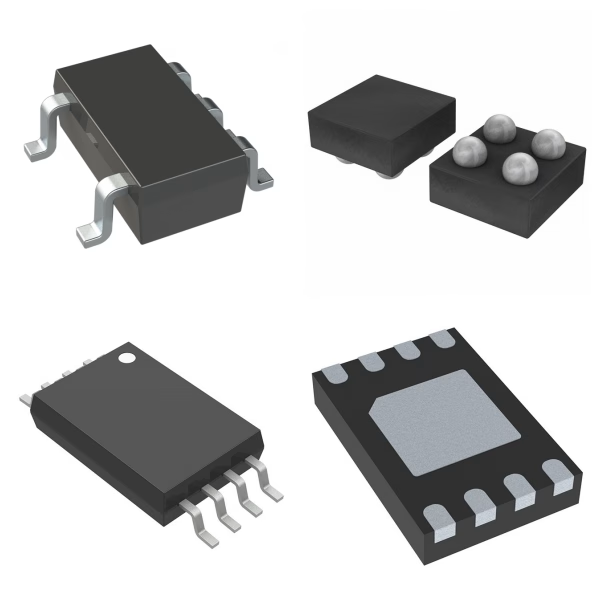
2. Package Form
SMD Type: such as SMAJ (400W), SMBJ (600W), SMCJ (1.5kW), etc.
Axial Lead Type: such as P4KE (400W), 1.5KE (1.5kW), 5KP (5kW), etc.
What are the Key Parameters of Transient Voltage Suppressors (TVS)?
|
Parameter |
Description |
|
VRWM |
Reverse off-state voltage (cut-off voltage), the maximum voltage at which TVS does not conduct |
|
VBR |
Breakdown voltage, the minimum voltage that triggers TVS conduction |
|
VC |
Clamping voltage, the peak voltage under transient current (needs to be lower than the maximum withstand voltage of the protected circuit) |
|
IR |
Reverse leakage current (usually micro-ampere level) |
|
Capacitance Value |
Low capacitance models (such as SAC series) are suitable for high-frequency signal protection |
Where are Transient Voltage Suppressors (TVS) Used?
1. Consumer Electronics: ESD protection for interfaces such as mobile phones and tablets (such as USB and HDMI).
2. Communication Equipment: Surge suppression for Ethernet ports and base station power supplies.
3. Industrial Control: Over-voltage protection for PLC modules and sensor circuits.
Automotive electronics: Vehicle power supply and CAN bus protection.
How to Select Transient Voltage Suppressors (TVS)?
1. Voltage Matching: VRWM needs to be higher than the normal working voltage of the circuit, and VBR needs to be lower than the maximum withstand voltage of the protected component.
2. Power Requirements: Select peak power according to transient pulse energy (such as 30KPA series supports 30kW).
3.Capacitance Control: Low capacitance TVS (such as SAC series 50pF) is required for high-speed signal lines.
4.Bidirectional/Unidirectional Selection: Determine polarity requirements according to circuit type (AC/DC).
Advantages and Using Precautions for Transient Voltage Suppressors (TVS)
1. Core Advantages
Response Speed: ps-level response, better than varistors (MOV) and gas discharge tubes (GDTs).
Reliability: manufactured by a semiconductor process, with no aging problems.
Precise Clamping: voltage accuracy can reach ±5%, and special models can be higher.
2. Precautions
The installation position needs to be close to the protected circuit to reduce the path impedance.
Heat dissipation design needs to be considered in high-power scenarios.
It can be combined with other protection devices (such as MOV, TSS) to form multi-level protection.
Transient Voltage Suppressors (TVS) FAQs
1) What is the difference between TVS and other protection devices?
TVS vs Gas Discharge Tube (GDT): TVS has a faster response (ps level vs μs level), but a smaller current flow; GDT is suitable for primary protection, and TVS is mostly used for secondary protection.
TVS vs Semiconductor Discharge Tube (TSS): TSS has a larger current flow, but a slower response; TVS is more suitable for high-frequency, low-energy scenarios.
2) Why is the installation position of TVS important?
TVS should be installed as close as possible to the protected device or interface to shorten the transient current path. Too long traces will increase parasitic inductance, resulting in higher clamping voltage and weakening the protection effect. For example, in RS485 interface protection, TVS should be directly connected between the signal line and the ground and placed close to the connector.
3) What are the special requirements for TVS in industrial environments?
Industrial scenarios require TVS with higher power levels (such as above 600W) to cope with strong surges generated by motor start-stop and relay action. At the same time, pay attention to the temperature range: industrial-grade TVS usually supports -55°C ~ 175°C, while consumer-grade only supports -40°C ~ 125°C.
4) What are the common failure modes of TVS?
Overvoltage Breakdown: The transient energy exceeds the Pppm limit of TVS, resulting in a permanent short circuit.
Thermal Failure: Continuous overcurrent causes high-temperature burning (if not used with a fuse).
Soldering Damage: Excessive reflow temperature may damage the internal structure of TVS, and a patch model that supports 260°C temperature resistance must be selected.
5) How to test the peak pulse current (IPP) of TVS?
Use a pulse generator with a standard waveform (such as 8/20μs or 10/1000μs) to gradually increase the current until the voltage across the TVS reaches Vc. Record the Ipp and Vc curves with an oscilloscope to verify whether they meet the nominal values. During the test, the single pulse interval must be controlled to ≥ 5 minutes to avoid overheating of the device.
