
Inverter PCBs: Design, Types, Key Specifications and More
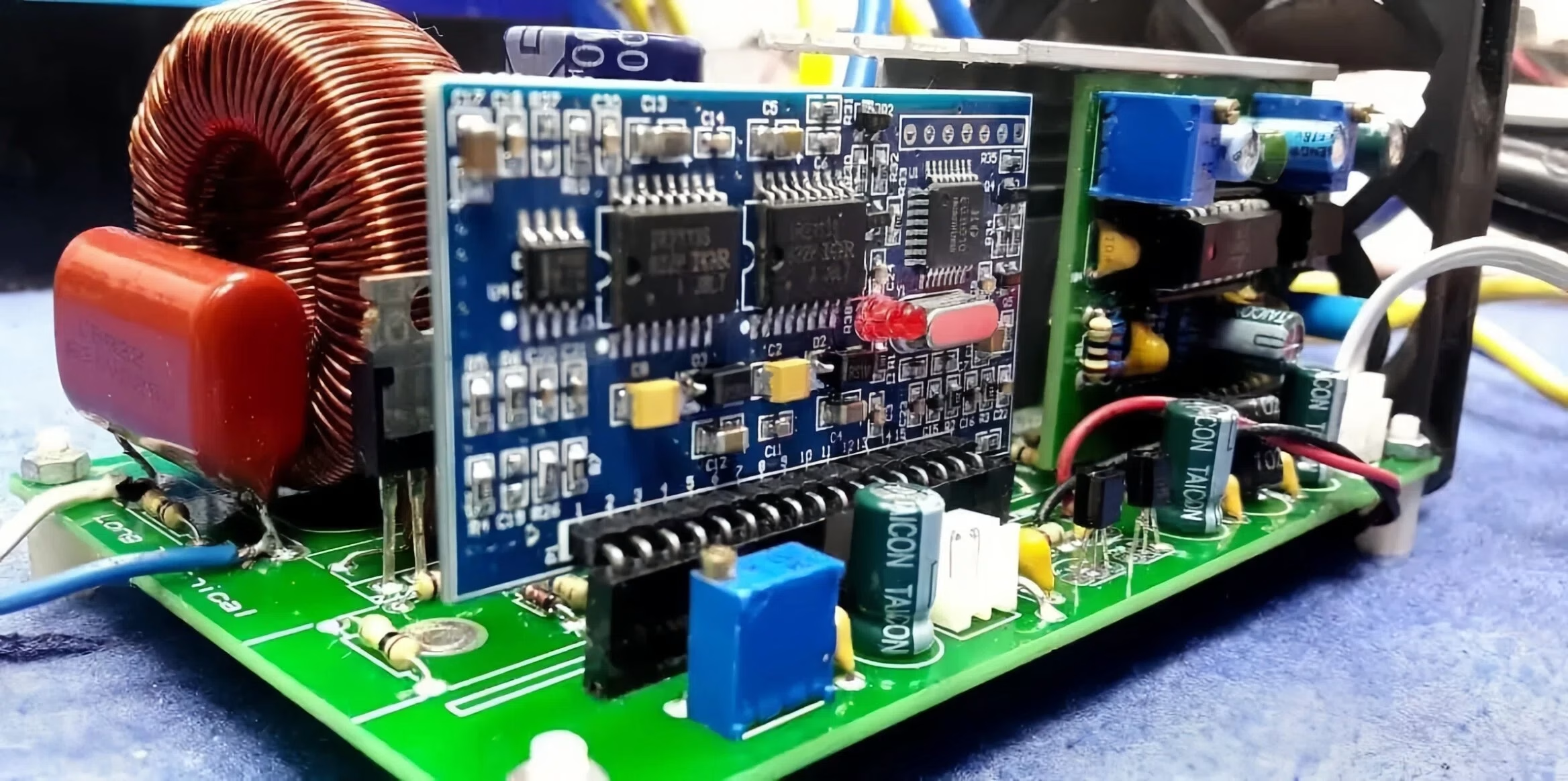
Table Of Contents
In the rapidly evolving landscape of electronics, the ability to efficiently convert direct current (DC) into alternating current (AC) is paramount. This critical function is primarily handled by an often-overlooked yet incredibly sophisticated component: the Inverter Printed Circuit Board (PCB). These specialized PCBs are the technological heart of countless devices, from renewable energy systems to everyday household appliances. Understanding their types, selection criteria, and intricate design considerations is essential for anyone involved in modern power electronics.
This comprehensive guide delves into the world of Inverter PCBs, exploring their fundamental role, the various types available, their primary components, and the crucial design principles that ensure their optimal performance and reliability. Whether you’re an engineer, a student, or simply curious about the technology powering our world, this article will provide valuable insights into the core of power conversion.
1. What Is an Inverter PCB?
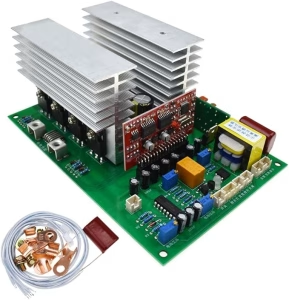
An Inverter PCB serves as the central control unit for an inverter circuit, which is an electronic device designed to convert DC power into AC power . This conversion is fundamental for powering a vast array of AC-driven equipment from DC sources, such as batteries, fuel cells, or solar panels. Essentially, the Inverter PCB manages the switching of power electronic components (like MOSFETs or IGBT s) to create an alternating waveform, often a sine wave, from a steady DC input.
Beyond simple conversion, modern Inverter PCBs incorporate complex control logic, often managed by microcontrollers or Digital Signal Processors ( DSPs), to regulate output voltage, frequency, and waveform purity. They are engineered to handle significant power levels while ensuring efficiency, stability, and protection against various electrical faults.
2. Benefits of an Inverter PCB
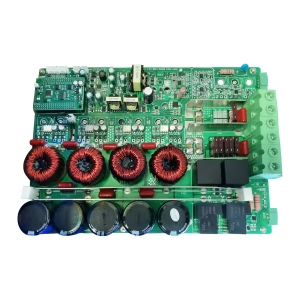
The strategic use and meticulous design of Inverter PCBs yield several significant advantages:
- Enhanced Power Efficiency:Optimized layouts and component placement minimize power losses, leading to higher energy conversion efficiency. This is crucial for battery -powered systems and renewable energy applications where every watt counts.
- Increased Reliability:Robust design, proper thermal management, and quality component selection contribute to the longevity and stable operation of the inverter, reducing the likelihood of failure in demanding environments.
- Compact and Space-Saving Design:PCBs allow for the integration of numerous components into a small footprint, leading to more compact and lighter inverter units, which is vital for portable devices and space-constrained applications.
- Versatility and Customization:Inverter PCBs can be tailored to various power levels, voltage requirements, and application-specific features, offering designers immense
- Superior Thermal Management:Thought ful PCB design facilitates efficient heat dissipation, preventing component overheating and ensuring long-term performance, especially in high-power applications.
- Improved Electromagnetic Compatibility (EMC):Proper layout and grounding strategies on the PCB help mitigate electromagnetic interference (EMI) and ensure the inverter operates without disrupting other electronic systems.
- Cost-Effectiveness at Scale:While initial design might be complex, mass production of well-designed Inverter PCBs can be highly cost- effective, particularly for consumer electronics and industrial applications.
3. Types of Inverter PCBs
Inverter PCBs are categorized primarily by the number of conductive layers they possess, each offering different levels of complexity , performance, and cost:
3.1 Single-Sided Inverter PCB
As the simplest type, a single-sided (or single-layer) Inverter PCB features only one conductive copper layer, typically on a fiberglass substrate. Components are usually placed on one side, with traces routed on the same side. These are the most cost-effective and easiest to manufacture, making them suitable for low-power, less complex inverter applications where space and high-density routing are not critical concerns. Examples include basic power converters in simple appliances or LED drivers.
3.2 Double-Layer Inverter PCB
Double-layer (or double-sided) Inverter PCBs have two conductive copper layers, one on the top and one on the bottom, separated by a dielectric material. Components can be mounted on both sides, and traces can be routed on both layers, connected by vias (plated through-holes). This type offers greater circuit density and routing flexibility compared to single-sided boards. They are a common choice for moderate-power inverters, providing a good balance between cost, performance, and complexity, allowing for more intricate power and control paths.
3.3 Multilayer Inverter PCB
Multilayer Inverter PCBs feature three or more conductive layers, stacked together with insulating materials. These boards can range from 4 to 16 (or even more) layers, providing significantly increased routing density and signal integrity. Inner layers are often dedicated to ground planes, power planes, and high-speed signal routing. Multilayer PCBs are indispensable for high-power, high-frequency, and highly complex inverter designs that require excellent thermal performance , superior EMI/EMC characteristics, and the ability to integrate many components in a compact space. They are crucial for applications like solar inverters, electric vehicle power electronics, and high-performance UPS systems.
4. Primary Components of Inverter PCBs
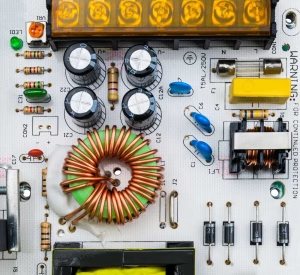
An Inverter PCB integrates a variety of components, each playing a critical role in the power conversion process and overall system functionality:
- Power Switching Devices:
- MOSFETs (Metal-Oxide-Semiconductor Field-Effect Transistors):Commonly used in lower to medium power inverters due to their high switching speeds and efficiency.
- IGBT s (Insulated Gate Bipolar Transistors):Preferred for higher power applications (e.g., industrial motor drives, high-power UPS) due to their robust current handling capabilities and lower conduction losses compared to MOSFETs at very high currents.
- SiC/GaN Devices:Emerging wide-bandgap semiconductors like Silicon Carbide (SiC) and Gallium Nitride (GaN) offer even higher switching frequencies, greater efficiency, and better thermal performance, paving the way for smaller, more efficient inverters.
- Capacitors:
- Input Filter Capacitors:Smooth the incoming DC voltage, reducing ripple and providing a stable voltage source for the switching devices.
- Output Filter Capacitors:Work with inductors to smooth the rectified AC waveform, ensuring a clean sine wave output.
- Decoupling Capacitors: Placed close to ICs to suppress high-frequency noise and ensure stable power supply to control circuits.
- Inductors:Crucial for filtering the output waveform, energy storage, and in some topologies, for boosting voltage. They work in conjunction with capacitors to form LC filters, shaping the output into a pure sinusoidal wave.
- Resistors:Used for current limiting, voltage division, biasing, and feedback networks within the control circuitry.
- Diodes:Employed for rectification, voltage clamping, and freewheeling paths to protect switching devices from inductive spikes.
- Microcontroller/DSP (Digital Signal Processor):The “brain” of the inverter, responsible for generating PWM (Pulse Width Modulation) signals to control the switching devices, monitoring system parameters (voltage, current, temperature), and implementing protection features.
- Gate Drivers:Interface circuits that provide the necessary voltage and current to rapidly turn the MOSFETs/IGBTs on and off, ensuring efficient and reliable switching.
- Connectors:For input DC power, output AC power, control signals, and communication interfaces.
5. Key Inverter PCB Design Considerations
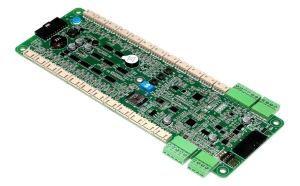
Designing an Inverter PCB is a complex task that requires careful attention to multiple factors to ensure optimal performance, reliability , and safety. Key points in Inverter PCB Design include:
5.1 Layout and Trace Routing
- Short, Wide Traces:Power paths carrying high currents (e.g., between input capacitors , switching devices, and output inductors) should be as short and wide as possible to minimize parasitic inductance and resistance, thereby reducing power losses and voltage drops.
- Minimizing Loop Areas:High-frequency switching paths create electromagnetic fields. Minimizing the loop area of these paths helps reduce EMI radiation and improves signal integrity.
- Separation of Grounds:It’s often beneficial to separate power ground and control ground with a single-point connection to prevent high-current noise from interfering with sensitive control signals.
- Component Placement:Place critical components (e.g., gate drivers near switching devices, decoupling capacitors near ICs) strategically to minimize trace lengths and improve performance . Heat-generating components should be spread out or positioned for optimal heat sink attachment.
- High-Voltage and High-Current Separation:Ensure adequate clearance and creepage distances between high-voltage traces and low-voltage traces/components to prevent arcing and ensure safety.
5.2 Thermal Management
Heat is the primary enemy of power electronics. Effective thermal management is crucial for the longevity and reliability of an inverter.
- Heat Sinks:Design for proper attachment of heat sinks to MOSFETs/IGBTs and other heat-generating components.
- Thermal Vias:Use an array of thermal vias under power components to transfer heat from the top layer to internal copper planes or to the bottom layer for dissipation.
- Copper Pours:Utilize large copper pours on power layers to act as heat spreaders.
- Airflow:Consider the overall enclosure design for natural convection or forced air cooling (fans).
5.3 EMI/EMC Considerations
Inverters generate significant electromagnetic noise due to high-frequency switching. Minimizing EMI and ensuring EMC ( Electromagnetic Compatibility) is vital.
- Ground Planes:Solid ground planes (especially in multilayer boards) act as shields and provide low-impedance return paths, reducing EMI.
- Filtering:Integrate input/output filters (LC filters, common-mode chokes) to suppress conducted and radiated emissions.
- Trace Shielding:Route sensitive signal traces between ground planes or use guard traces.
- Component Selection:Choose components with low EMI characteristics.
5.4 Material Selection
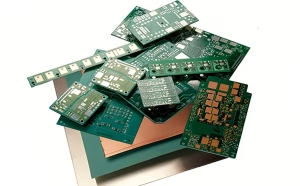
The choice of PCB substrate material significantly impacts performance, especially at higher frequencies and temperatures.
- FR-4:Standard and cost-effective for most applications.
- High-Tg Materials:For higher temperature applications, materials with higher glass transition temperatures (Tg) are necessary.
- Low -Loss/High-Frequency Materials:For very high-frequency inverters, materials with lower dielectric constant (Dk) and dissipation factor (Df) are preferred to minimize signal loss.
- Thermal Conductivity:Materials with better thermal conductivity can aid in heat dissipation.
5.5 Reliability and Durability
Designing for robustness ensures the inverter can withstand operational stresses and environmental factors.
- Robust Components :Select components rated for worst-case voltage, current, and temperature conditions, with sufficient derating.
- Mechanical Stability:Ensure the PCB and components can withstand vibrations and mechanical stress.
- Con formal Coating:For harsh environments (humidity, dust), conformal coatings can protect the PCB.
- Testing:Thorough testing, including environmental stress testing, is crucial.
6. Selecting the Right Inverter PCB: Key Specifications
When selecting or designing an Inverter PCB, several key specifications must be carefully considered to match the application’s requirements. The following table outlines typical considerations across different power ranges and complexities:
| Feature/Parameter | Low Power Inverter (e.g., 50W-500W) | Medium Power Inverter (e.g., 50 0W-5kW) | High Power Inverter (e.g., 5kW+) |
| Typical Topology | H-bridge, Flyback, Buck-Boost (for DC-DC stage) | Full-bridge, Half-bridge, Multilevel (for DC-AC stage) | Multilevel (NPC, FC), Modular Multilevel Converter (MMC) |
| Efficiency Target | 85-92% | 90-96% | 95-98%+ |
| Switching Frequency | 10-50 kHz | 20-100 kHz | 50-250 kHz+ (SiC/Ga N) |
| Cooling Method | Natural Convection, Small Heat Sinks | Active Fans, Larger Heat Sinks, Thermal Vias | Liquid Cooling , Large Forced-Air Systems, Advanced Thermal Materials |
| Recommended PCB Type | Single-sided or Double-layer | Double-layer or 4-6 Layer Multilayer | 6-10+ Layer Multilayer (with power/ground planes) |
| Key Switching Components | MOSFETs | IG BTs, High-Voltage MOSFETs | High-Power IGBT Modules, SiC MOSFETs/Diodes, GaN HEMTs |
| Input/Output Voltage | 12V/24V DC to 120V/230V AC | 24V/48V/96V DC to 120V/230V/4 00V AC | Higher DC Link Voltages (e.g., 400V-800V+) to 3-Phase AC |
| Protection Features | Over-voltage, Over-current, Short-circuit | All basic, plus Under-voltage, Over-temperature, Reverse Polarity | Advanced Grid Protection, Anti-islanding, Arc Fault Detection, Isolation |
7. Applications of Inverter PCBs
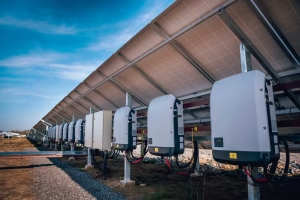
The versatility and necessity of Inverter PCBs are evident in their widespread adoption across numerous industries and applications:
- Solar Power Systems:Crucial for converting the DC output from solar panels into usable AC power for homes and grids. This includes grid-tied, off-grid, and hybrid inverters.
- Uninterruptible Power Supplies (UPS):Provide seamless power backup by converting battery DC power to AC during grid outages, protecting sensitive electronics like computers and medical equipment.
- Electric Vehicles (EVs) and Hybrid Electric Vehicles (HEVs):Inverter PCBs are at the heart of the powertrain, converting the battery’s DC power to AC to drive the electric motors.
- Motor Drives:Used in industrial automation to control the speed and torque of AC motors, significantly improving energy efficiency in factories and machinery.
- Consumer Electronics:Found in appliances like air conditioners, refrigerators, and induction cooktops that utilize inverter technology for variable speed control and energy efficiency.
- Industrial Power Supplies:Provide stable and regulated AC power for various industrial machinery and processes.
- Wind Energy Systems:Similar to solar inverters, they convert the variable AC output from wind turbines into grid-compatible AC power.
8.FAQs
9.Summary
An inverter PCB is the core control unit that converts DC power to AC power, essential for applications like solar systems, UPS, and EVs. Key considerations in its design include selecting appropriate power switching devices (MOSFETs, IGBTs, SiC/GaN), implementing effective thermal management and EMI/EMC strategies, and choosing the right PCB type (single-sided, double-layer, or multilayer) based on power requirements. The design prioritizes efficiency, reliability, and compactness through careful layout, component selection, and adherence to key specifications.

Contact Us
Phone: +86-18123905375
Email: sales@assemblepcb.com
WhatsApp: +86-18123905375
Wechat: +86-18123905375
Free Queto
Latest Blog
Table Of Contents
Contact Us
Phone: +86-18123905375
Email: sales@assemblepcb.com
WhatsApp: +86-18123905375
Wechat: +86-18123905375
Free Queto