
Turnkey vs Consigned PCB Assembly: Your Guide to Choosing
Table Of Contents
1. Introduction: Why Your PCB Assembly Model Matters
When embarking on a new electronics project, selecting a Printed Circuit Board (PCB) assembly partner is a critical decision. However, an equally, if not more, impactful choice often goes overlooked: the assembly model itself. The decision between turnkey PCB assembly and consigned PCB assembly shapes far more than just purchasing responsibility; it profoundly influences your total cost, schedule reliability, quality accountability, compliance workload, and overall project risk.
In today’s complex and often volatile electronics supply chain, where component shortages and price fluctuations are common, this strategic choice can be the difference between a project’s success and costly delays. This guide is designed for engineers, OEM buyers, and sourcing teams seeking a practical framework to navigate these options and optimize their PCB decisions efficiently.
2. What is Turnkey PCB Assembly?
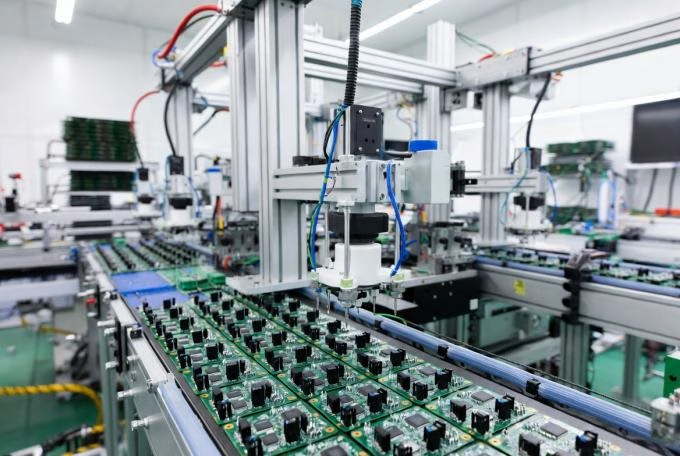
Turnkey PCB assembly is a comprehensive, full-service solution where the Electronics Manufacturing Services (EMS) provider handles the entire manufacturing process from start to finish. The term “turnkey” implies that the customer simply “turns the key” to receive a completed product, with minimal direct involvement in the intricate procurement and assembly stages.
Key Features of Full Turnkey PCB Assembly:
- Component Sourcing:The EMS provider takes full responsibility for procuring all necessary electronic components, including resistors, capacitors, integrated circuits (ICs), connectors, and even the bare PCBs themselves. They leverage their network of suppliers and purchasing power to secure parts.
- PCB Fabrication:The manufacturer manages the fabrication of the bare Printed Circuit Boards according according to the client’s specifications.
- Assembly:The core process of mounting components onto the PCB using surface-mount technology (SMT), through-hole technology (THT), or a combination of both.
- Quality Control & Testing:Rigorous inspections, functional testing, and quality assurance processes are performed to ensure the assembled PCBs meet specified performance and reliability standards.
- Logistics & Shipment:The EMS provider manages the logistics of shipping the finished products directly to the client or their designated destination.
- Supply Chain Management:The manufacturer assumes the burden of managing the entire supply chain, mitigating risks like component shortages, counterfeit parts, and lead time fluctuations.
Pros of Turnkey PCB Assembly:
- Simplified Process:A single point of contact reduces coordination effort and internal workload for the client.
- Faster Time-to-Market:Streamlined component sourcing and integrated processes can significantly reduce overall project lead time.
- Cost Efficiency (indirect ):While the upfront cost might seem higher, EMS providers often secure bulk discounts on components and have established relationships, potentially saving costs in the long run by avoiding delays and reworks.
- Reduced Risk:The manufacturer bears the material risk, counterfeit exposure, and responsibility for component quality.
- Expertise Access:Clients gain access to the manufacturer’s deep expertise in sourcing, assembly techniques, and quality control.
- Ideal for Prototyping & Startups:Excellent for rapid prototyping or for startups with limited procurement resources.
Cons of Turnkey PCB Assembly:
- Less Control:Clients have less direct control over component selection, suppliers, and procurement negotiations.
- Potential for Higher Upfront Cost:The convenience often comes with a higher initial price tag, as the manufacturer includes their service fees and markup on components.
- Dependency:Greater reliance on a single EMS provider for all aspects of the build.
3. What is Consigned PCB Assembly?
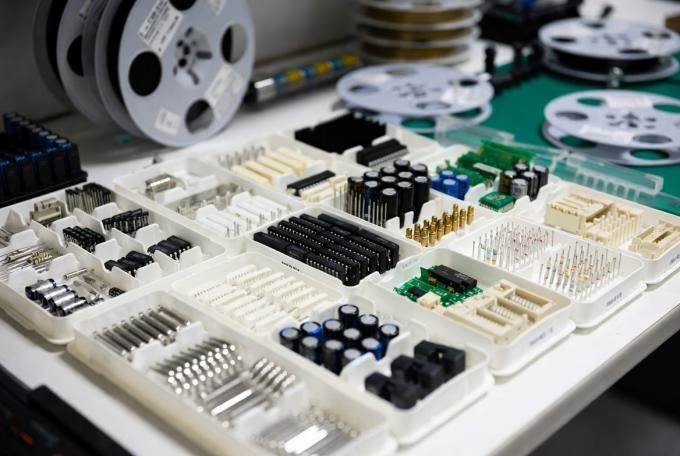
Consigned PCB assembly, sometimes referred to as consignment manufacturing, operates on a different premise. In this model, the client assumes responsibility for procuring and supplying some or all of the necessary components to the manufacturer. The assembly partner then focuses primarily on the manufacturing execution, assembling the client-provided components onto the bare PCBs according to specifications.
Key Features of Consigned PCB Assembly:
- Client-Provided Components:The client sources and delivers all specified electronic components, including passive and active parts, connectors, and often the bare PCBs themselves, directly to the assembly house .
- Assembly Focus:The manufacturer’s primary role is to assemble these components onto the PCBs, perform testing, and package the finished units.
- Quality Verification:A reputable consignment assembler will verify component quality upon receipt and ensure proper storage to prevent damage before assembly.
- Inventory Management (Client Side):The client manages the inventory and logistics of their components until they are delivered to the assembler.
Pros of Consigned PCB Assembly:
- Greater Control:Clients maintain full control over component sourcing, supplier relationships, and component quality.
- Potentially Lower Component Cost:If a client has established relationships with suppliers and can achieve better pricing or wishes to use specific, hard-to-find, or custom components, this model can lead to lower component cost.
- Transparency:Direct visibility into component pricing and supply chain choices.
- Ideal for Specific Needs:Well-suited for projects requiring specialized components, legacy parts, or when clients have existing, strong supply chain relationships.
Cons of Consigned PCB Assembly:
- Increased Internal Workload:Significant time and resources are required for component sourcing, procurement, and inventory management.
- Higher Material Risk:The client bears the burden of component shortages, counterfeit parts, and ensuring all components arrive on time and in correct quantities.
- Longer Lead Times (Potentially):Delays can occur if any components are late or incorrect, impacting the entire production schedule. Coordinating multiple suppliers adds complexity.
- Complexity:Managing numerous suppliers, different lead times, and potential minimum order quantities for various parts can be challenging.
- Quality Issues:If client -sourced components are of poor quality or incorrect specification, it can lead to assembly failures and reworks, for which the client is typically responsible.
4. The Hybrid Approach: Partial Turnkey PCB Assembly
In addition to full turnkey and consigned models, a third option, known as partial turnkey PCB assembly, sits in between. This hybrid model allows for flexibility, where the client provides some critical or custom components, while the assembler sources the rest. For instance, a client might provide specialized ICs or connectors, while the EMS provider handles common passive components and the bare PCBs. This approach offers a balance of control and convenience, tailored to specific project needs.
5. Turnkey vs. Consigned PCB Assembly: A Comparative Overview
To help visualize the fundamental differences, here’s a direct comparison:
| Feature | Turnkey PCB Assembly | Consigned PCB Assembly |
| Component Sourcing | Manufacturer handles all component sourcing. | Client handles all (or most ) component sourcing. |
| Responsibility & Risk | Manufacturer is responsible for component quality, shortages, and material risk. | Client is responsible for component quality, availability, and material risk. |
| Internal Workload | Low for the client (single point of contact). | High for the client (managing multiple suppliers, procurement). |
| Lead Time | Often shorter and more predictable due to integrated supply chain. | Can be longer and less predictable due to client’s component delivery schedule. |
| Cost Structure | Includes manufacturer’s component markup and service fees . Simpler billing. | Assembly service fee plus client’s component costs. More granular control over component spend. |
| Control Over Components | Less direct control for the client. | High control over component selection and suppliers. |
| Best For | Rapid prototyping, startups, complex designs, projects with limited internal resources, fast time-to-market. | Cost-sensitive projects with established supply chains, unique component requirements, high-volume production with in-house procurement expertise. |
| Supply Chain Management | Handled entirely by the EMS provider. | Primarily handled by the client. |
6. When to Choose Turn key PCB Assembly
Choosing the turnkey model is often beneficial in several scenarios:
- Rapid Prototyping & Small Batches:For quick-turn projects or initial prototypes, turnkey services drastically cut down the time spent on sourcing, enabling faster iterations and design validation.
- Limited Internal Resources:Startups or smaller companies without a dedicated procurement team or established supply chain often find turnkey assembly indispensable.
- Complex Designs:When a design involves a wide variety of components or specialized parts, entrusting sourcing to an experienced assembler can prevent costly errors and delays.
- Time-to-Market is Critical:If getting your product to market quickly is a top priority, the streamlined process of turnkey assembly offers a significant advantage.
- Mitigating Risk:For companies looking to offload the material risk, counterfeit exposure, and financial burden associated with component inventory.
7. When to Choose Consigned PCB Assembly
The consigned model can be the superior choice under specific conditions:
- Cost -Sensitive Projects with Sourcing Expertise:If your company has a robust procurement department capable of securing components at better prices than an EMS provider, consignment can lead to overall cost savings.
- Specific Component Requirements:For projects that demand specific vendors, proprietary components, or parts with long lead times that you prefer to manage directly.
- Existing Inventory:If you already possess a significant inventory of components from previous projects or bulk purchases, consignment allows you to utilize these assets.
- High-Volume Production:In high-volume scenarios, even small savings per component can accumulate significantly. Companies with dedicated procurement teams can optimize these savings.
- Maintaining Vendor Relationships:If maintaining direct relationships with component suppliers is strategically important for your business.
8. Key Factors for Decision-Making
When making your choice, consider these crucial factors:
- Budget and Cost:Evaluate not just component prices but also the hidden costs of procurement, inventory management, potential delays, and rework. Turnkey might have a higher upfront sticker price but can be more cost-effective overall due to efficiency and risk mitigation.
- Lead Time:How quickly do you need your boards? Turnkey generally offers faster turnaround due to integrated processes.
- Internal Resources and Expertise:Do you have the personnel, tools, and expertise for efficient component sourcing, quality checks, and inventory management?
- Supply Chain:How volatile is the market for your required components? How comfortable are you managing the risks of shortages, counterfeits, and obsolescence?
- Project Complexity and Volume:Simple , low-volume projects might allow for consigned assembly, while complex, higher-volume production often benefits from turnkey’s streamlined approach.
- Quality Control:While both models involve quality checks, turnkey places full accountability on the manufacturer for component authenticity and performance.
As Santosh Das, an electronics and technology blogger with over 25 years of experience, notes, “Whether you are a startup designing your first product or a large electronics company scaling production, choosing the right assembly model is crucial for cost, quality, and time-to-market.”
FAQ
- Question1:What is the main difference between turnkey and consigned PCB assembly?
Answer: The primary difference lies in who is responsible for component sourcing. In turnkey, the manufacturer handles everything, including sourcing. In consigned, the client provides the components to the manufacturer for assembly. - Question 2:Which option is generally more expensive?
Answer: Turnkey PCB assembly often has a higher upfront cost because it includes the manufacturer’s service fees for sourcing and supply chain management. However, when considering the total cost of ownership (including internal labor, risk, and potential delays), turnkey can sometimes be more economical overall. - Question3:Can I combine aspects of both models?
Answer: Yes, this is known as partial turnkey PCB assembly. In this hybrid model, the client provides specific, often critical or custom components , while the manufacturer sources the rest. - Question4:Which model is better for startups?
Answer: Turnkey PCB assembly is generally recommended for startups as it reduces internal workload, mitigates material risk, and accelerates time-to-market, allowing the startup to focus on design and market strategy.
Summary
The choice between turnkey and consigned PCB assembly is a strategic decision that extends beyond mere component purchasing. It impacts every facet of your project, from financial outlay and schedule adherence to quality assurance and risk management. Turnkey offers simplicity, speed, and reduced internal workload, making it ideal for rapid prototyping, startups, and complex projects.
Consigned assembly provides greater control and potential cost savings for companies with strong internal procurement capabilities and specific component requirements. By carefully evaluating your project’s unique needs, resources, and risk tolerance against the distinct advantages and disadvantages of each model, you can make an informed decision that drives efficiency, reduces costs, and ensures the successful delivery of your electronic products.
Key Takeaways
- Turnkey = Simplicity:The manufacturer handles all component sourcing, PCB fabrication, and assembly, providing a single point of contact.
- Consigned = Control:The client manages component procurement, ideal for specific parts or existing supply chains.
- Risk Allocation :Turnkey shifts material risk (shortages, counterfeits) to the manufacturer; consigned keeps it with the client.
- Time vs. Cost:Turnkey often offers faster lead times, while consigned might offer lower component cost if procurement is optimized.
- Partial Turnkey:A flexible hybrid model that balances control and convenience.
OrinewPCB has been providing reliable one-stop PCB solutions for over 14 years, covering everything from PCB manufacturing and electronic component sourcing to assembly, testing, and IC programming. With a strong commitment to quality and fast delivery, we help global clients bring their products to market efficiently.
Contact Us
Phone: +86-18123905375
Email: sales@assemblepcb.com
WhatsApp: +86-18123905375
Wechat: +86-18123905375
Free Queto
Latest Blog
Table Of Contents
Contact Us
Phone: +86-18123905375
Email: sales@assemblepcb.com
WhatsApp: +86-18123905375
Wechat: +86-18123905375
Free Queto
