
|
Images
|
Mfr.Part #
|
In Stock
|
Manufacturer
|
Description
|
Package
|
|---|---|---|---|---|---|

|
TLHW-88R-930-SS | 32420 | Floyd Bell Inc | BUZZER 33.02MM PNL MNT | Bulk |

|
TLHW-V88Y-930-QF | 15009 | Floyd Bell Inc | BUZZER 35.81MM PNL MNT | Bulk |

|
AI-2429-TT-12V-R | 28095 | PUI Audio, Inc. | BUZZER PIEZO 12V 23.8MM TH | Tray |
|
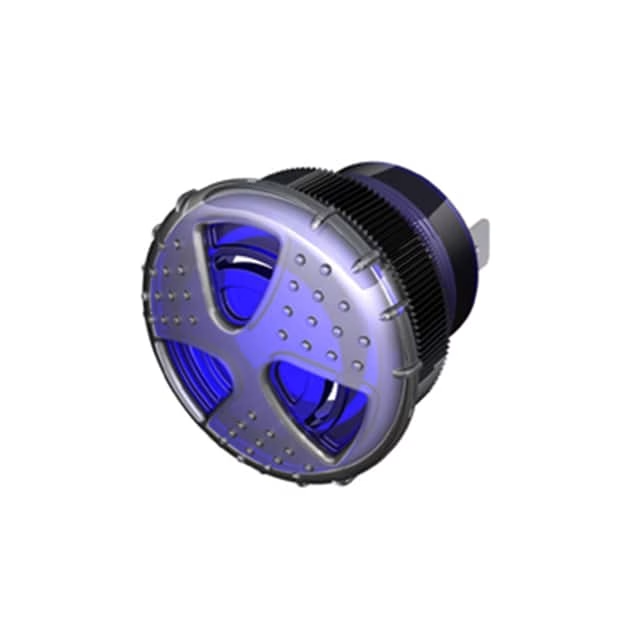
TLHB-V88B-930-QF | 11333 | Floyd Bell Inc | BUZZER 35.81MM PNL MNT | Bulk |
|
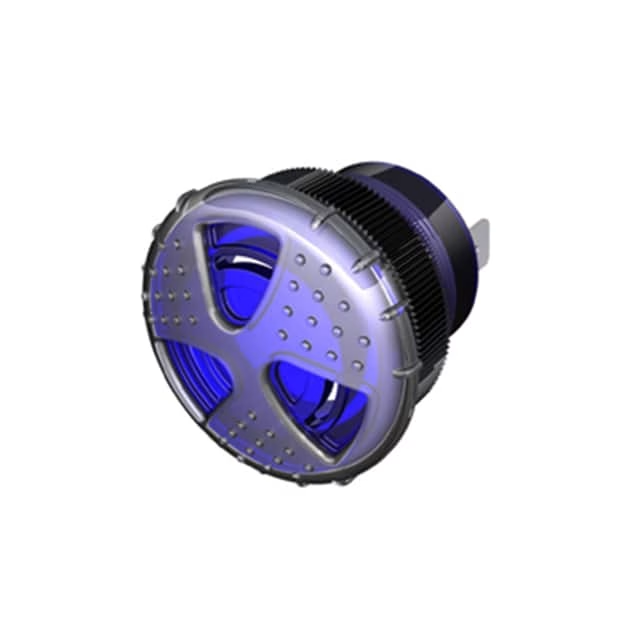
TLHS-V88B-930-Q | 4041 | Floyd Bell Inc | BUZZER 35.81MM PNL MNT | Bulk |
|
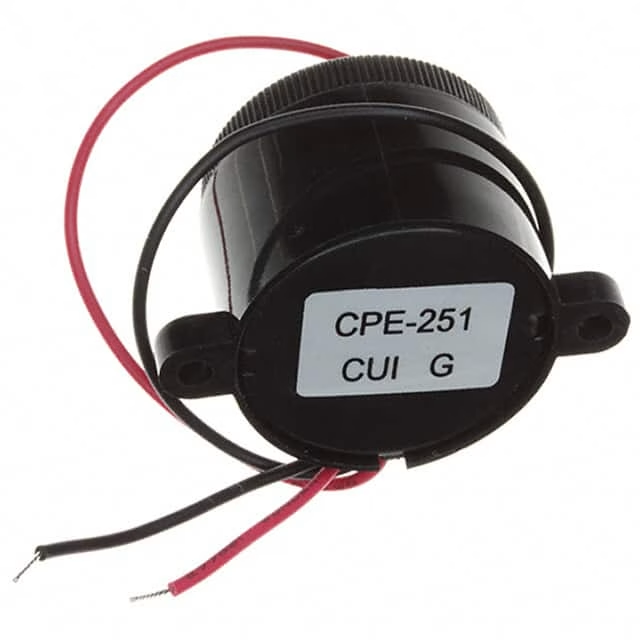
CPE-251 | 36034 | CUI Devices | BUZZER PIEZO 12V 28MM FLANGE | Box |
|
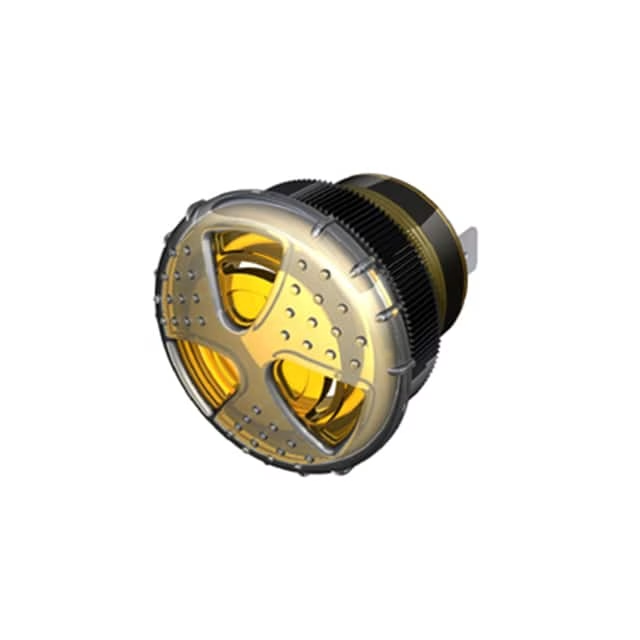
TLHT-V88Y-930-Q | 16591 | Floyd Bell Inc | BUZZER 35.81MM PNL MNT | Bulk |
|
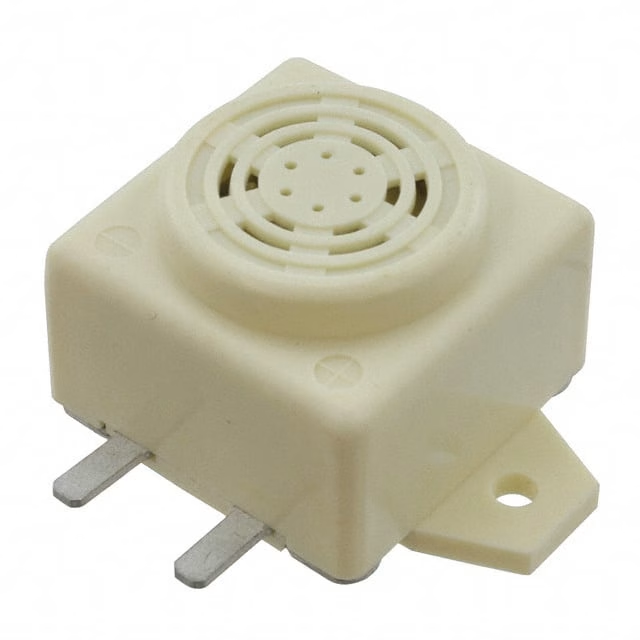
AI-2604-TF-12V-R | 47051 | PUI Audio, Inc. | BUZZER MAGN 12V 26X26MM FLANGE | Tray |
|
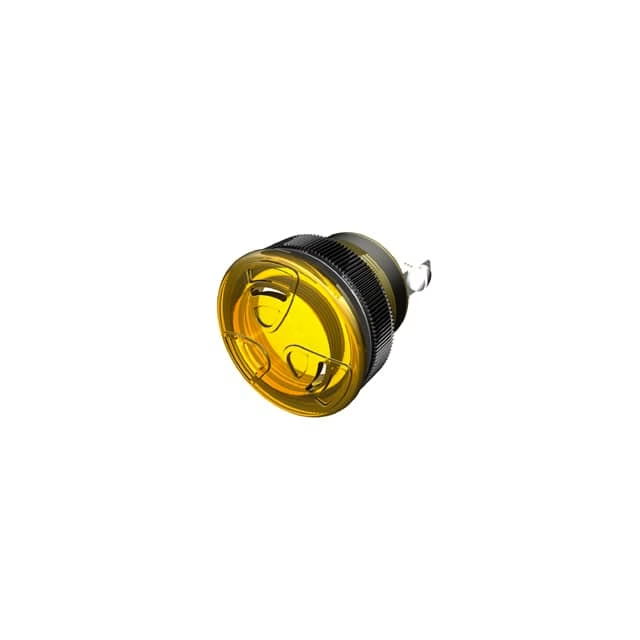
TLHB-88Y-930-SF | 9152 | Floyd Bell Inc | BUZZER 33.02MM PNL MNT | Bulk |

|
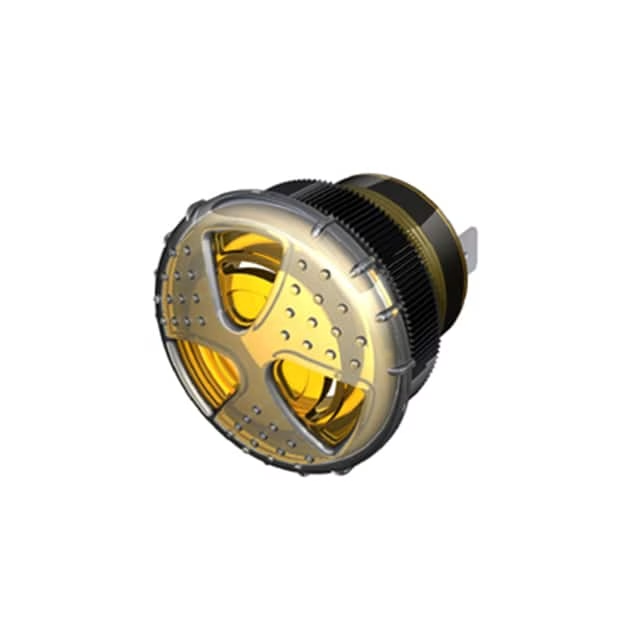
TP224012-1 | 19189 | DB Unlimited | BUZZER PIEZO 12V 22.1MM SMD | Tape & Reel (TR) |
|
TLHB-V88Y-930-QS | 9644 | Floyd Bell Inc | BUZZER 35.81MM PNL MNT | Bulk |
|
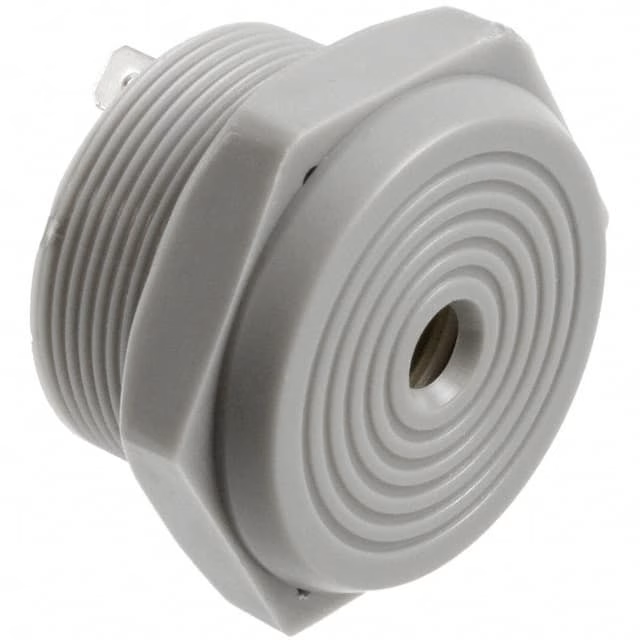
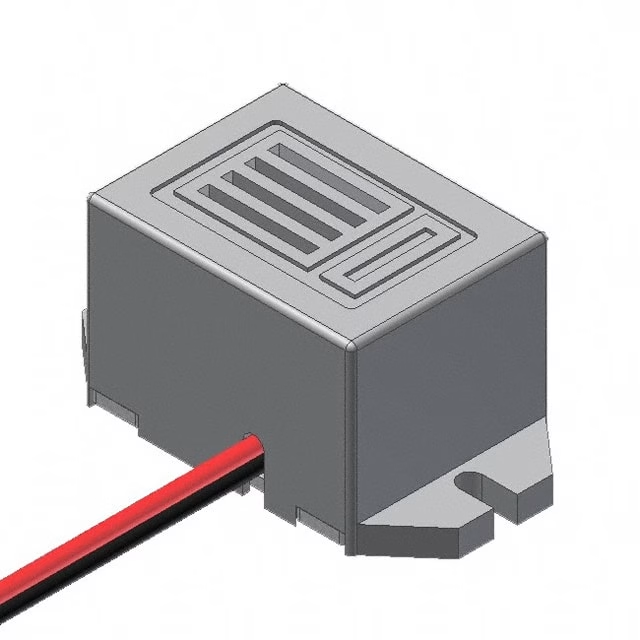
PK-27N35EPQ | 4445 | Mallory Sonalert Products Inc. | BUZZER PIEZO 12V 36.5MM PNL MNT | Bulk |
|
AI-2304-TF-LW120-R | 33501 | PUI Audio, Inc. | BUZZER MAGNETIC 24V 32X17 FLANGE | Tray |

|
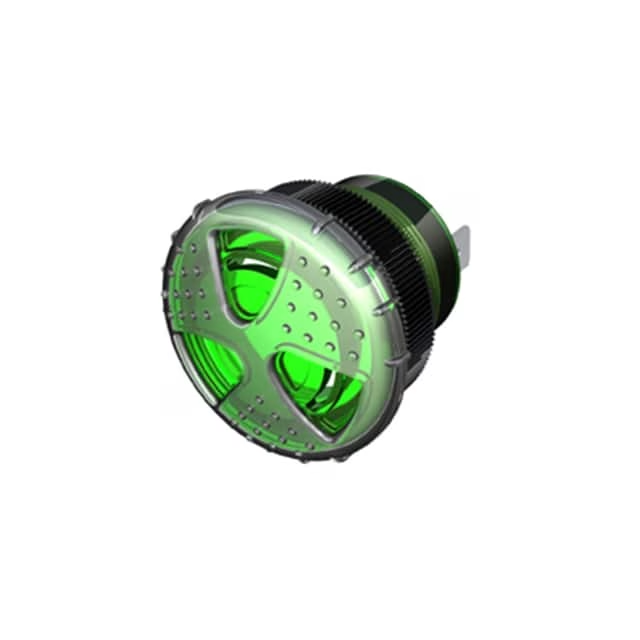
TLHB-V88W-930-QS | 31781 | Floyd Bell Inc | BUZZER 35.81MM PNL MNT | Bulk |
|
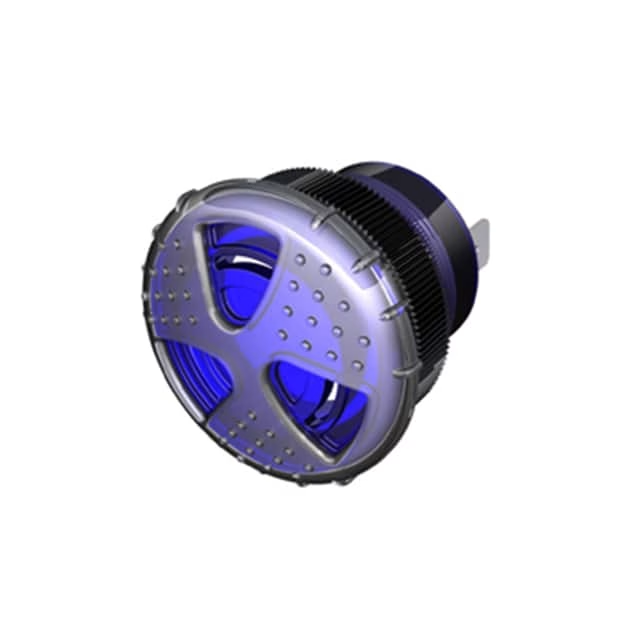
TLHW-V88G-930-QS | 40136 | Floyd Bell Inc | BUZZER 35.81MM PNL MNT | Bulk |
|
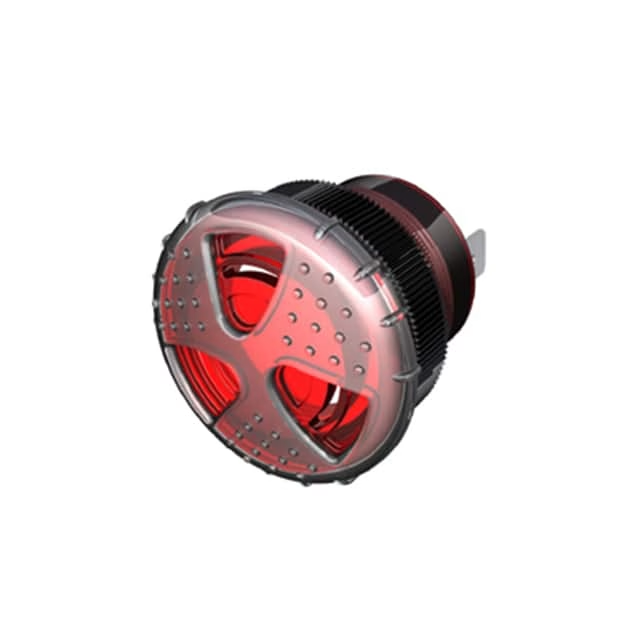
TLHW-V88B-930-QS | 3716 | Floyd Bell Inc | BUZZER 35.81MM PNL MNT | Bulk |
|
TLHB-V88R-930-QS | 40128 | Floyd Bell Inc | BUZZER 35.8MM PNL MNT | Bulk |
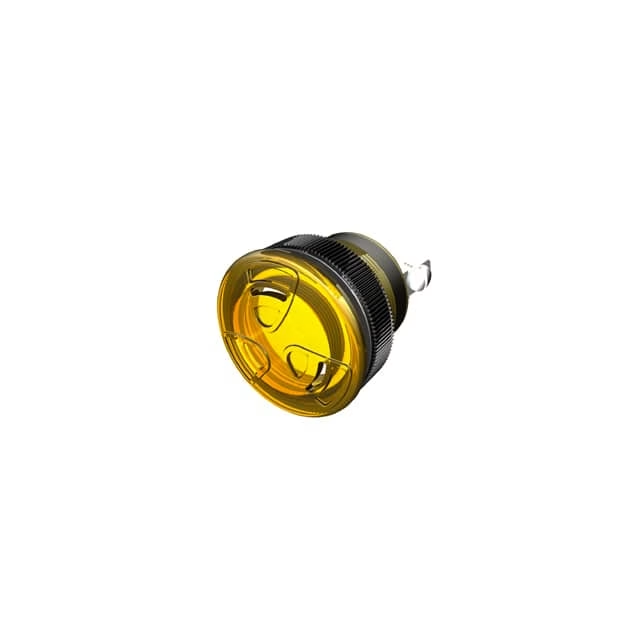
|
TLHW-88Y-930-SS | 11007 | Floyd Bell Inc | BUZZER 33.02MM PNL MNT | Bulk |

|
TLHT-88G-930-S | 37573 | Floyd Bell Inc | BUZZER 33.02MM PNL MNT | Bulk |

|
TLHW-V88R-930-QS | 45978 | Floyd Bell Inc | BUZZER 35.81MM PNL MNT | Bulk |

Alarms, Buzzers, and Sirens
1. What are Alarms, Buzzers, and Sirens?
1) Buzzer
Active Buzzer: Built-in oscillation circuit, it will sound when powered on, but the tone is single.
Passive Buzzer: It needs to be driven by an external pulse signal, the tone frequency can be controlled, and the cost is lower.
Type Subdivision: Including piezoelectric (relying on piezoelectric ceramic vibration) and electromagnetic (driving the diaphragm through the electromagnetic coil).
2) Alarm and Sirens
Especially used in high-intensity warning scenarios, such as ship alarm systems that must comply with specific military standards (such as MIL-DTL-0015303R).
2. How do Alarms Work?
1) Sounding Principle
Piezoelectric: The audio signal is generated by the multivibrator to drive the piezoelectric ceramic to vibrate.
Electromagnetic: The interaction between the electromagnetic coil and the magnet drives the diaphragm to sound.
2) Drive Circuit
Commonly used NPN/PNP transistor or MOS tube drive, pay attention to the current limiting resistor and bleeder diode protection circuit.
When the microcontroller is driven, an external current amplifier chip (such as ULN2003) is required to provide sufficient driving capacity.
3. What are Alarms, Buzzers, and Sirens Used For?
Consumer Electronics: Prompt tone generation for computer motherboards, printers, electronic toys, and other devices.
Industrial and Security: Fire alarm and equipment failure warning.
Automotive Electronics: Reversing radar, safety system alarm.
Ship and Military: Ship alarm devices that meet specific standards.
4. How to Choose Alarms, Buzzers, and Sirens?
Parameter Considerations: Operating voltage (1.5V-15V), sound pressure level, frequency range (1.5kHz-5kHz), etc.
Note: Some devices need to select the packaging type according to the scenario (such as a piezoelectric buzzer with a resonance box to enhance the volume).
5. Alarms, Buzzers, and Sirens FAQs
1) In which scenarios are alarm systems widely used?
Mainly used for building fire warning and intelligent evacuation, such as real-time danger notification and crowd guidance through sound and light alarm equipment.
2) What safety regulations should be considered when using alarm equipment?
Fire safety guidelines must be followed, such as regularly checking the status of the equipment, ensuring that the installation location meets emergency evacuation requirements, and avoiding false triggering of electromagnetic interference.
3) What are the regulatory requirements for alarm systems?
Some scenarios (such as vehicle seat belt warning systems) must comply with specific regulations, such as allowing exemptions from alarm triggering in specific startup modes, but still meeting basic safety standards.
4) How to design user-friendly alarm prompts?
The alarm sound must clearly distinguish different emergency levels (such as a short buzzer sound for a mild warning, and a continuous siren sound for a high-risk state) and reduce environmental noise interference.