
|
Images
|
Mfr.Part #
|
In Stock
|
Manufacturer
|
Description
|
Package
|
|---|---|---|---|---|---|
|
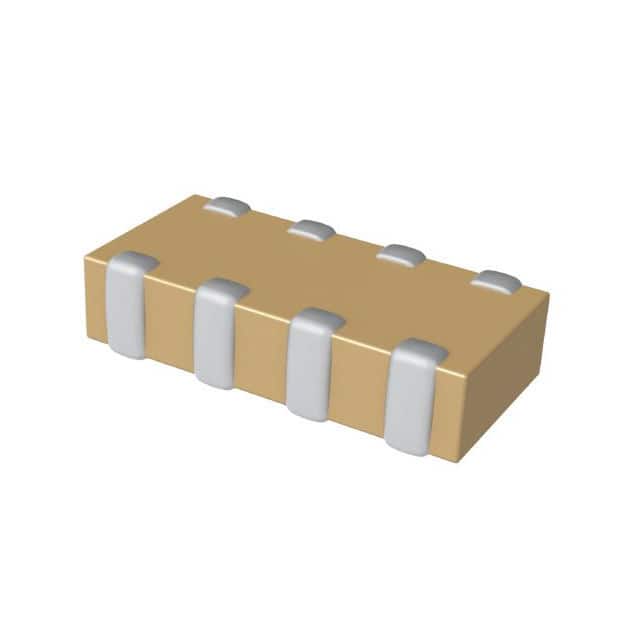
CA052X473K5RAC7536 | 25509 | KEMET | CAP ARRAY 0.047UF 50V X7R 0508 | 0508 (1220 Metric) |
|
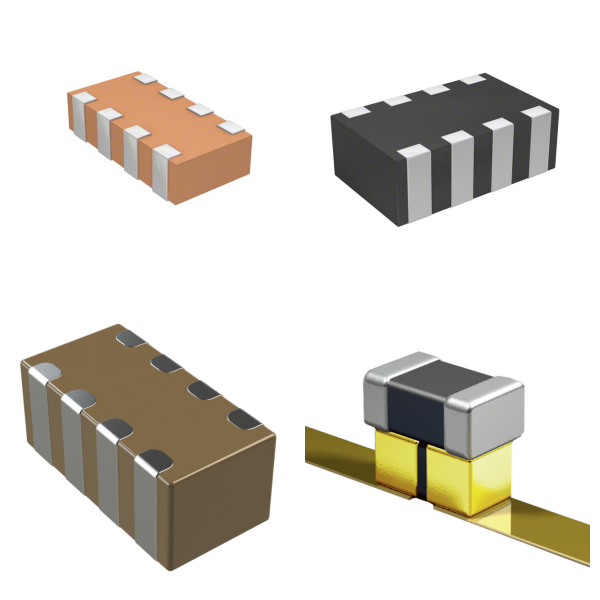
SFC37S35-5K391E-F | 35942 | Cornell Dubilier Electronics (CDE) | CAP ARRAY 5UF/35UF 370V RADIAL | Radial, Can |
|
|
SFS44T35-5J384E-00DU | 35171 | Cornell Dubilier Electronics (CDE) | CAP ARRAY 5UF/35UF 440V RADIAL | Radial, Can |
|
|
CA052X333K5RAC7800 | 38001 | KEMET | CAP ARRAY 0.033UF 50V X7R 0508 | 0508 (1220 Metric) |
|
|
SFC44S25-15K391E-F | 26028 | Cornell Dubilier Electronics (CDE) | CAP ARRAY 15UF/25UF 440V RADIAL | Radial, Can |
|
|
SFC44S20-10K303E-F | 30924 | Cornell Dubilier Electronics (CDE) | CAP ARRAY 10UF/20UF 440V RADIAL | Radial, Can |
|
|
CA052X472K5RAC7800 | 15416 | KEMET | CAP ARRAY 4700PF 50V X7R 0508 | 0508 (1220 Metric) |
|
|
CA052X473K5RAC3123 | 29472 | KEMET | CAP ARRAY 0.047UF 50V X7R 0508 | 0508 (1220 Metric) |
|
|
CA052X683K5RAC7800 | 4425 | KEMET | CAP ARRAY 0.068UF 50V X7R 0508 | 0508 (1220 Metric) |
|
|
SFC44S25-10K391E-F | 10184 | Cornell Dubilier Electronics (CDE) | CAP ARRAY 10UF/25UF 440V RADIAL | Radial, Can |
|
|
SFC37S40-10K391E-F | 32922 | Cornell Dubilier Electronics (CDE) | CAP ARRAY 10UF/40UF 370V RADIAL | Radial, Can |
|
|
SFT44T50-10K391E-F | 15715 | Cornell Dubilier Electronics (CDE) | CAP ARRAY 10UF/50UF 440V RADIAL | Radial, Can - 3 Lead |
|
|
SFC44S15-10K303E-F | 3126 | Cornell Dubilier Electronics (CDE) | CAP ARRAY 10UF/15UF 440V RADIAL | Radial, Can |
|
|
SFT44T60-5K391E-F | 11909 | Cornell Dubilier Electronics (CDE) | CAP ARRAY 5UF/60UF 440V RADIAL | Radial, Can - 3 Lead |
|
|
SFC37S35-7.5K391E-F | 14423 | Cornell Dubilier Electronics (CDE) | CAP ARRAY 7.5UF/35UF 370V RADIAL | Radial, Can |
|
|
SFC37S25-5K303E-F | 2899 | Cornell Dubilier Electronics (CDE) | CAP ARRAY 5UF/25UF 370V RADIAL | Radial, Can |
|
|
SFC44S20-7.5K303E-F | 33029 | Cornell Dubilier Electronics (CDE) | CAP ARRAY 7.5UF/20UF 440V RADIAL | Radial, Can |
|
|
SFC37S25-7.5K303E-F | 9996 | Cornell Dubilier Electronics (CDE) | CAP ARRAY 7.5UF/25UF 370V RADIAL | Radial, Can |
|
|
SFC37S40-5K391E-F | 30564 | Cornell Dubilier Electronics (CDE) | CAP ARRAY 5UF/40UF 370V RADIAL | Radial, Can |
|
|
SFT44T50-5K391E-F | 8117 | Cornell Dubilier Electronics (CDE) | CAP ARRAY 5UF/50UF 440V RADIAL | Radial, Can - 3 Lead |

CAP ARRAY 10UF/15UF 440V RADIAL
Cornell Dubilier Electronics (CDE)
Capacitor Networks, Arrays
Capacitor Networks/Arrays are widely used in miniaturized, high-performance electronic devices, especially in consumer electronics, automotive electronics, and communication equipment.
1. Definition and Basic Structure of Capacitor Networks or Arrays
Integrated Design: Capacitor Networks/Arrays are a combination of multiple capacitors in a single package, usually containing multiple capacitor units, whose parameters (such as capacitance and withstand voltage) may be the same or different.
Packaging Form: Common packages include SMD packages, which are suitable for high-density circuit board design, can reduce space occupation, and improve wiring efficiency.
2. Functions and Application Scenarios of Capacitor Networks or Arrays
Circuit Decoupling and Filtering: Used in power management circuits, multiple capacitor units work together to effectively suppress high-frequency noise and stabilize voltage, especially suitable for digital circuits and high-speed signal processing scenarios.
Signal Coupling and Matching: In radio frequency (RF) and communication circuits, array capacitors are used to achieve signal coupling or impedance matching to improve signal integrity.
3. What are the Technical Advantages of Capacitor Networks or Arrays?
Consistency and Reliability: Integrated packaging ensures parameter consistency of each capacitor unit and reduces performance fluctuations of discrete components due to process differences.
Simplified Design and Production: By reducing the number of discrete capacitors used, assembly complexity is reduced, and production yield is improved while facilitating automated mounting.
4. How to Choose Capacitor Networks or Arrays?
Capacitance Configuration: It is divided into symmetrical type (all units have the same capacitance) and asymmetrical type (capacitance difference configuration), which can be flexibly selected according to circuit requirements.
Withstand Voltage and Temperature Characteristics: It is necessary to select a model that meets industrial standards (such as AEC-Q200) in combination with the working environment (such as temperature range, and voltage fluctuation).