
|
Images
|
Mfr.Part #
|
In Stock
|
Manufacturer
|
Description
|
Package
|
|---|---|---|---|---|---|
|
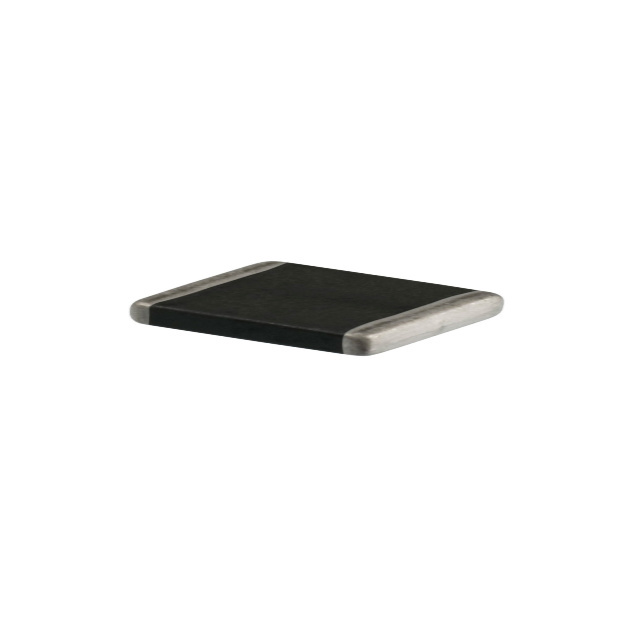
ZV8L1206T201N | 22200 | Stackpole Electronics Inc | MLV, 8V (Vrms), 15%, 1206 200A | 1206 (3216 Metric) |
|
|
ZV20K2220T122N | 6856 | Stackpole Electronics Inc | MLV, 20V (Vrms), 10%, 2220 1200A | 2220 (5750 Metric) |
|
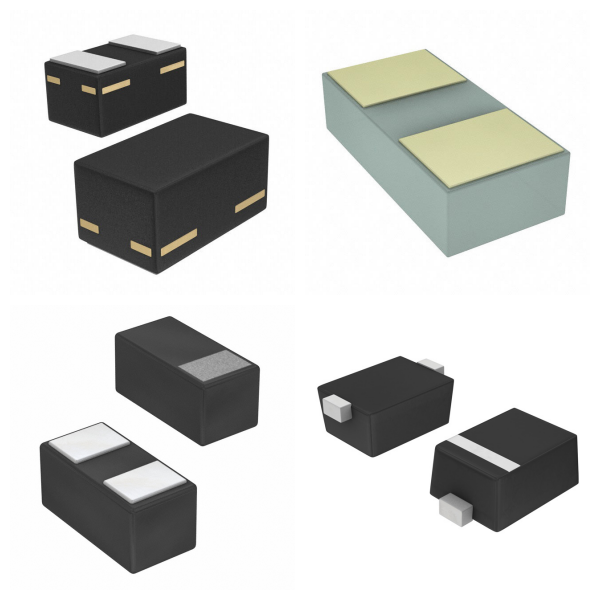
SV275K23B | 48264 | Stackpole Electronics Inc | MOV, 275V (Vrms), 10%, 23mm | Radial |
|
|
CVH460K10T | 10671 | Stackpole Electronics Inc | MOV, 460V (Vrms), 10%, 10mm | Disc 10mm |
|
|
CV320K20B | 37759 | Stackpole Electronics Inc | MOV, 320V (Vrms), 10%, 20mm | Disc 20mm |
|
|
CVH575K23B | 7575 | Stackpole Electronics Inc | MOV, 575V (Vrms), 10%, 23mm | Disc 23mm |
|
|
CVH550K20B | 43026 | Stackpole Electronics Inc | MOV, 550V (Vrms), 10%, 20mm | Disc 20mm |
|
|
CVH230K20T | 8623 | Stackpole Electronics Inc | MOV, 230V (Vrms), 10%, 20mm | Disc 20mm |
|
|
CVH275K20T | 41667 | Stackpole Electronics Inc | MOV, 275V (Vrms), 10%, 20mm | Disc 20mm |
|
|
PV115K4032T | 46844 | Stackpole Electronics Inc | MLV, 115V (Vrms), 10%, 4032, 120 | 4032 (1080 Metric) |
|
|
CVH230K23B | 3476 | Stackpole Electronics Inc | MOV, 230V (Vrms), 10%, 23mm | Disc 23mm |
|
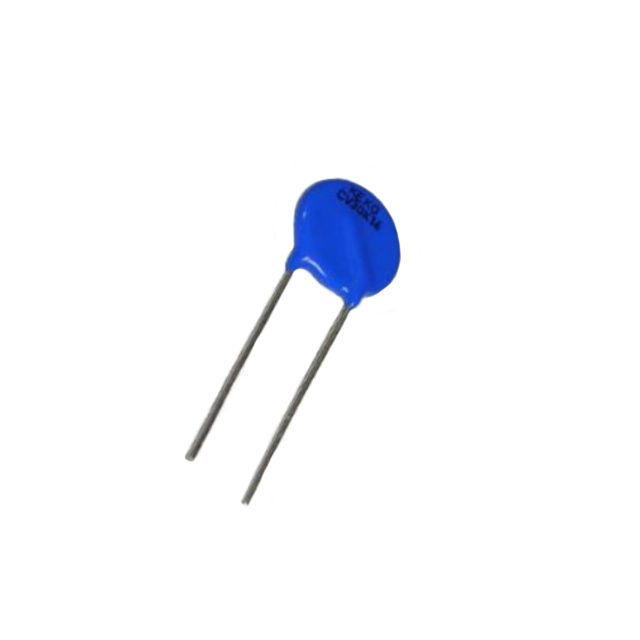
CV140K10T | 48709 | Stackpole Electronics Inc | MOV, 140V (Vrms), 10%, 10mm | Disc 10mm |
|
|
CVH175K07B | 25842 | Stackpole Electronics Inc | MOV, 175V (Vrms), 10%, 7mm | Disc 7mm |
|
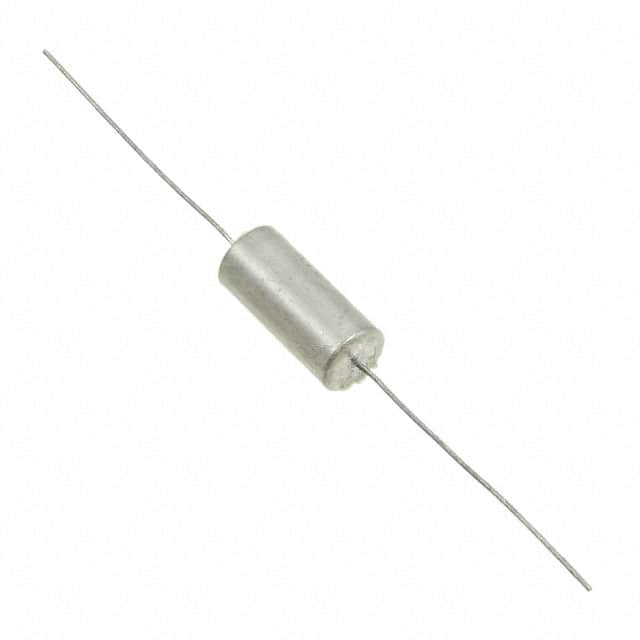
PV60K3225T | 39209 | Stackpole Electronics Inc | MLV, 60V (Vrms), 10%, 3225, 400A | 2-SMD, J-Lead |
|
|
CV680K20B | 20552 | Stackpole Electronics Inc | MOV, 680V (Vrms), 10%, 20mm | Disc 20mm |
|
|
ZVL40K10T | 31900 | Stackpole Electronics Inc | MOV, 40V (Vrms), 10%, 10mm | Disc 10mm |
|
|
CVH115K10T | 18118 | Stackpole Electronics Inc | MOV, 115V (Vrms), 10%, 10mm | Disc 10mm |
|
|
ZVL25K07T | 8918 | Stackpole Electronics Inc | MOV, 25V (Vrms), 10%, 7mm | Disc 7mm |
|
|
ZV4M1206T151N | 34024 | Stackpole Electronics Inc | MLV, 4V (Vrms), 20%, 1206 150A | 1206 (3216 Metric) |
|
|
SV275K20B | 5627 | Stackpole Electronics Inc | MOV, 275V (Vrms), 10%, 20mm | Radial |

Varistors, MOVs
1. MOVs Overview
Metal oxide varistor (MOV) is a nonlinear resistor device made of metal oxide materials such as zinc oxide (ZnO). Its core characteristics are:
Voltage Sensitivity: The resistance value changes dynamically with the voltage at both ends. It presents a high resistance state under normal voltage and quickly turns on and clamps the voltage when overvoltage occurs.
Bidirectional Symmetry: It has the same response characteristics to positive and reverse voltages and is suitable for AC/DC circuits.
Overvoltage Protection Function: By discharging surge current, it protects the subsequent circuit from transient overvoltage damage such as lightning strikes and switching transients.
2. What are the components of a MOV?
The typical structure of MOV includes the following parts:
Body: It is sintered by zinc oxide (ZnO) grains and a small amount of dopants such as bismuth and antimony to form a polycrystalline semiconductor structure.
Electrode: A metal layer (such as silver) covering both ends of the body for electrical connection.
Packaging: Epoxy resin or ceramic shell, providing mechanical protection and environmental isolation.
Temperature Adaptability: The operating temperature range of ordinary models is -40°C to 85°C, and the high-temperature model can be extended to -40°C to 125°C, which is suitable for harsh environments such as automobiles and industries.
3. How to Select MOVs?
Varisor Voltage: The voltage value when 1mA current flows, usually selected as 1.5 times the maximum operating voltage of the circuit (AC needs to be multiplied by √2).
Maximum Clamping Voltage: The peak voltage after the MOV is turned on must be lower than the withstand voltage of the protected device.
Current Capacity: The ability to withstand surge current must be more than twice the theoretical calculated value (such as 1kV differential mode protection requires ≥1000A).
Response Time: Nanosecond level (better than gas discharge tubes, slower than TVS), meeting the needs of most electronic circuits.
4. What are MOVs Used for?
Power Port Protection: Suppress power grid fluctuations and lightning surges, often forming multi-level protection with fuses and gas discharge tubes.
Communication Equipment: Protect signal lines from electrostatic discharge (ESD) and electromagnetic interference (EMI).
Household Appliances/Industrial Equipment: Such as air conditioners and motor drivers, to prevent transient overvoltage caused by switching operations.
5. What are the Advantages and Disadvantages of MOVs?
Advantages:
Low cost, large flow rate (above 10kA), suitable for high-energy surge protection.
Non-polarity design, simplified circuit layout.
Limitations:
Poor Thermal Stability: Multiple surge shocks may cause performance degradation, requiring heat dissipation design or redundant protection.
Inherent junction capacitance (tens to hundreds of pF), is not suitable for high-frequency signal lines.
6. Comparison with Other Protection Devices
TVS Diode: Faster response (picosecond level), lower junction capacitance, but smaller flow rate, suitable for precision circuits.
Gas Discharge Tube: Very large current flow, but slow response (microsecond level), mostly used for primary protection.
PTC Resettable Fuse: Focuses on overcurrent protection, often used in conjunction with MOV.
7. Selection Recommendation Examples for MOVs
General Type: 07D series (withstand voltage 2kV, current flow 40 times), suitable for consumer electronics.
High Temperature Type: 10D series (withstand voltage 4kV), meets the needs of automotive electronics and industrial environments.
Through reasonable selection and multi-level protection design, MOV can significantly improve the reliability and life of electronic systems.
Varistors, MOVs FAQs
1) What is a varistor?
A varistor is a nonlinear resistor device whose resistance changes with voltage and is mainly used for circuit overvoltage protection. When the voltage exceeds the threshold, its resistance drops sharply, absorbing excess current to protect sensitive components.
2) What is the difference between MOV (metal oxide varistor) and ordinary varistors?
MOV is a type of varistor, which is sintered by zinc oxide particles and additives. It has high energy absorption capacity and fast response characteristics and is suitable for high voltage and high current scenarios.
3) What is the conduction mechanism of the varistor?
When the voltage at both ends is lower than the varistor voltage (such as U1mA), its resistance is extremely high (megaohm level), and almost no current passes through; when the voltage exceeds the threshold, the resistance drops sharply (to milliohm level), and energy is absorbed by the large current to achieve voltage clamping.
4) What is the typical layout of the varistor in the power circuit?
Parallel Connection: directly connected between the power input terminal and the protected circuit to ensure that the surge current flows through the varistor first.
Series Fuse: prevent the varistor from causing fire or circuit failure after short circuit failure.
5) What scenarios should avoid using varistors?
High-frequency signal line: due to the large junction capacitance, it may interfere with signal integrity.
Long-term high humidity environment: Zinc oxide material is easily affected by moisture, resulting in performance degradation, and requires additional sealing treatment.