
|
Images
|
Mfr.Part #
|
In Stock
|
Manufacturer
|
Description
|
Package
|
|---|---|---|---|---|---|
|
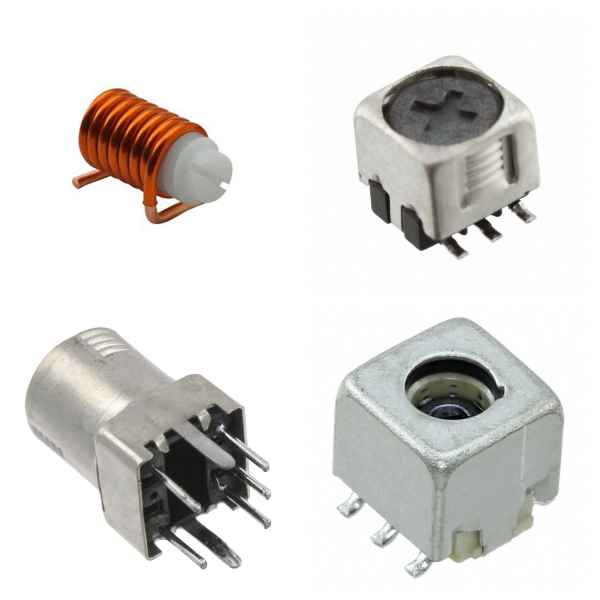
WVL9EB1R8K | 18553 | Vishay Dale | ADJUSTABLE INDUCTOR 1.8UH TH | Radial, Vertical Cylinder |
|
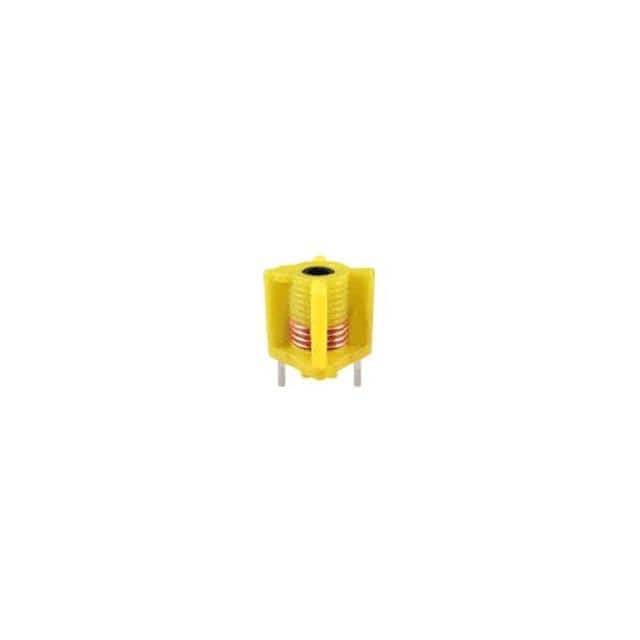
CTE526HNAF-100305 | 21606 | Central Technologies | 0.19UH TUNABLE COIL | Radial |
|
|
WVL9EB120K | 8471 | Vishay Dale | ADJUSTABLE INDUCTOR 12UH TH | Radial, Vertical Cylinder |
|
|
CTE526HNAF-100319 | 20476 | Central Technologies | 0.21UH TUNABLE COIL | Radial |
|
|
WVL9EB270K | 33038 | Vishay Dale | ADJUSTABLE INDUCTOR 27UH TH | Radial, Vertical Cylinder |
|
|
CP55-T308-NP | 38574 | Sumida America Components Inc. | ADJUSTABLE INDUCTOR 10UH SMD | Nonstandard |
|
|
CTE526HNAF-100318 | 25171 | Central Technologies | 0.15UH TUNABLE COIL | Radial |
|
|
CTE526HNAF-100298 | 24223 | Central Technologies | 0.17UH TUNABLE COIL | Radial |
|
|
CTE526HNAF-100079 | 11016 | Central Technologies | 0.33UH TUNABLE COIL | Radial |
|
|
CTE526HNAF-100109 | 32923 | Central Technologies | 0.53UH TUNABLE COIL | Radial |
|
|
CTE526HNAF-100301 | 15854 | Central Technologies | 0.28UH TUNABLE COIL | Radial |
|
|
CTE526HNAF-100299 | 24543 | Central Technologies | 0.21UH TUNABLE COIL | Radial |
|
|
CTE526HNAF-100306 | 5076 | Central Technologies | 0.24UH TUNABLE COIL | Radial |
|
|
CTE526HNAF-100309 | 39996 | Central Technologies | 0.44UH TUNABLE COIL | Radial |
|
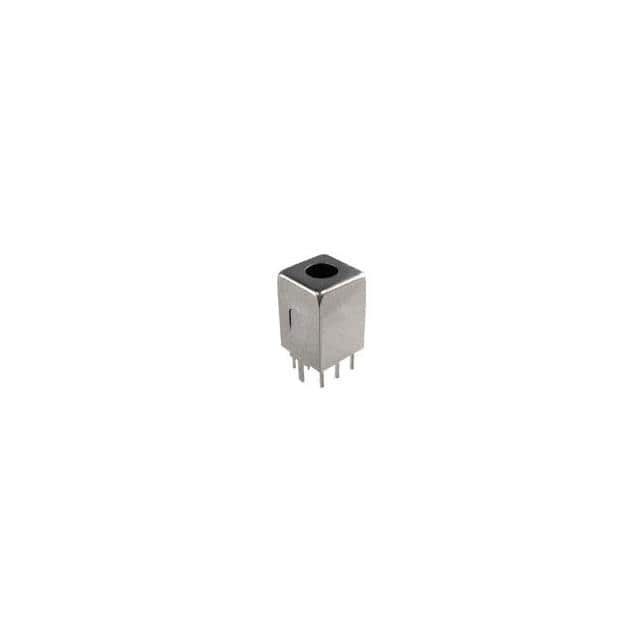
CTCLNSF-T1028Z | 5199 | Central Technologies | 6.8 MH VARIABLE COIL | Radial |
|
|
CTE526HNAF-100315 | 9710 | Central Technologies | 0.04UH TUNABLE COIL | Radial |
|
|
CTE526HNAF-100307 | 23740 | Central Technologies | 0.31UH TUNABLE COIL | Radial |
|
|
CTE526HNAF-100313 | 17610 | Central Technologies | 0.10UH TUNABLE COIL | Radial |
|
|
CTCLNSF-T1029Z | 19519 | Central Technologies | 8.2 MH VARIABLE COIL | Radial |
|
|
CTE526HNAF-100316 | 23117 | Central Technologies | 0.07UH TUNABLE COIL | Radial |

Adjustable Inductors
An adjustable inductor is a passive component that can adjust the inductance value mechanically or electrically. Its core structure usually includes magnetic materials (such as ferrite cores) and movable adjustment devices. By changing the position of the core or the spacing between the coils, the inductance value can be dynamically adjusted. It is widely used in high-frequency circuits, power systems, and electronic equipment.
1. How do Adjustable Inductors Work?
1) Mechanically Adjustable Type
A ferrite core with a threaded structure is usually used. The magnetic resistance of the magnetic circuit is changed by rotating the core position inside the transformer, thereby achieving continuous adjustment of the inductance value. For example, the oscillation coil of a semiconductor radio adjusts the coupling distance between the coil and the core by rotating the magnetic cap.
2) Magnetic Saturation Adjustment Type
The inductance is adjusted by changing the magnetic saturation state of the core material. For example, a linear coil uses the relative position of the permanent magnet and the coil to adjust the magnetic saturation characteristics to achieve nonlinear inductance compensation.
3) Filling Medium Adjustment Type
Some designs use synthetic resin and other materials as core carriers, combined with surface roughening treatment to enhance mechanical fixing performance and ensure adjustment stability.
2. What are Adjustable Inductors Used for?
High-Frequency Circuit: used in the local oscillator circuit of radio equipment, frequency tuning is achieved by adjusting the inductance value and capacitance in real-time.
Power System: used as an inductor reactor to dynamically adjust the reactive power of the power grid and suppress harmonic interference.
Display Device: in the line scanning circuit of traditional TV sets, the linear distortion of the image is compensated by adjusting the magnetic core.
Resonant Circuit: combined with capacitors to form an LC filter circuit, filter specific frequency signals, and suppress noise.
3. What are the Technical Characteristics of Adjustable Inductors?
Adjustment Range: depends on the magnetic core material (such as ferrite and amorphous alloy) and mechanical structure design, some models can achieve several times the inductance change.
Frequency Response: in high-frequency applications, the influence of core loss and distributed capacitance on Q value needs to be considered, and low-loss magnetic core materials are usually selected.
Reliability Design: the precision adjustment mechanism needs to have dustproof and vibration-resistant characteristics, and industrial-grade products often use fully sealed packaging.
4. Selection Points for Adjustable Inductors
Current Capacity: the saturation current index needs to be evaluated to avoid a sudden drop in inductance due to core saturation.
Temperature Stability: The temperature coefficient of ferrite material directly affects the long-term stability of the inductance value.
Packaging Form: It is divided into plug-in type, SMD type and modular packaging to meet the needs of different installation scenarios.
5. Adjustable Inductors FAQs
1) What is the difference between adjustable inductors and fixed inductors?
Flexibility: Adjustable inductors support real-time adjustment to meet dynamic circuit requirements, while fixed inductance values are statically set;
Structural Complexity: Adjustable devices contain additional adjustment components and are usually more expensive.
2) What issues should be paid attention to when using adjustable inductors?
Mechanical Stability: Frequent adjustment may cause core wear or poor contact;
Temperature Influence: High temperature may change the magnetic permeability of the core material, and wide temperature specifications need to be selected;
Installation Method: Avoid external force vibration to cause inductance value drift.